


反渗透膜污染:监测、表征、缓解策略及未来方向,第一小节:摘要&引言
正文
摘要
水资源短缺在过去数十年间已成为许多国家面临的全球性挑战,因此,反渗透(RO/Reverse Osmosis)作为一种有前景且经济高效的海水淡化和废水再利用工具应运而生。
目前,RO占全球海水淡化产能的65%以上。然而,膜污染是RO工艺中的主要问题。污染会缩短膜的使用寿命并降低其渗透性,同时增加操作压力和化学清洗频率。
总体而言,污染会降低淡化水的质量和产量,从而通过影响RO膜的效能和经济性,阻碍其可持续应用。污染源于水中污染物与膜材料之间的各种物理化学相互作用,导致污染物在膜表面和或膜孔内积聚。
本综述阐述了颗粒物、有机物、无机物和生物污染物等主要污染类型,以及影响其形成和发展的主要因素。此外,还综述了目前使用的膜污染监测方法、表征技术和潜在的缓解策略。最后,讨论了RO膜污染仍面临的挑战和未来研究方向。
关键词
RO膜;污染物表征;污染监测与缓解;膜改性。
1.引言
水覆盖了地球表面70%以上的面积,其中超过97%为咸水。河流和湖泊中的淡水资源极为有限,即全球仅有不到0.007%的水可供家庭使用,这表明了传统可持续淡水资源的稀缺性[1]。
在过去40年间,全球用水量已增长四倍,原因在于世界人口翻了一番,到2023年1月已达80.09亿。因此,每年必须额外供应清洁且低盐度的水,以满足正常的农业、工业和家庭用水需求[1,2]。农业和工业部门约占全球总用水量的93%,家庭用水则占剩余的7%[1,2,3]。
图1展示了预计到2025年地球将面临的水资源短缺状况[4],届时全球约三分之二的人口将生活在水资源紧张地区,超过18亿人将遭受清洁水资源短缺。然而此后,这些数字预计还将急剧上升[5]。因此,研究人员不断在寻找可持续且经济高效的清洁饮用水来源[6,7,8,9]。
海洋中的咸水占地球水资源的97%以上,是一个巨大的水库,应加以有效利用以克服当前的全球水危机[5,10]。因此,海水淡化是克服全球水资源压力的最有效且经济高效的技术[11];然而,对于缺乏苦咸水或海水资源的地区,废水回收是克服水资源短缺的可行方案[12,13]。
图1:2025年水资源短缺情况预测[4]——译注:本综述收稿于2022年7月,发表于2023年3月;原图分辨率不足,可能引起不必要误解,故删之。
目前,许多国家的城市已建有大型海水淡化处理装置[14,15]。过去十年间,海水淡化产能急剧增长,2010年至2019年年均增长率约为7%[16]。当前,全球约有18000座海水淡化装置,总产能约为9980万m³/d(立方米/天)[17]。
纳滤(NF/Nanofiltration)、反渗透(RO)和压力延迟渗透/减压渗透(PRO/Pressure Retarded Osmosis )等膜技术应用最为广泛。而多效蒸馏(MED/Multi-effect Desalination)[18]、多级闪蒸(MSF/Multistage Flash Distillation),以及膜电容去离子(MCDI/Membrane Capacitive Deionization)和微生物燃料电池(MFC/Microbial Fuel Cell)等新方法,也被认为是获取可持续清洁水资源的有前景的工艺[19]。
过去几十年,RO海水淡化工艺取得了长足进步,并已在海水淡化领域占据主导地位。目前,RO海水淡化装置占全球海水淡化总产能的65.5%以上。
图2a展示了全球海水淡化按工艺划分的产能占比,揭示了RO的巨大产水量[20];
图2b则显示了全球海水淡化运行中进水类型的百分比;
图2c则揭示了基于RO工艺的海水淡化装置的主要优势在于能效,其能耗已从20世纪70年代的超过15 KWh/m³(千瓦时/立方米)降至2000年后的不足3 KWh/m³[21]。
目前已开发出多种降低RO装置能耗的方法,包括使用节能/能量回收设备、提高RO PA-TFC(聚酰胺薄膜复合)膜的分离效率,以及优化海水淡化装置设计(例如采用分段式淡化)等[21,22]。
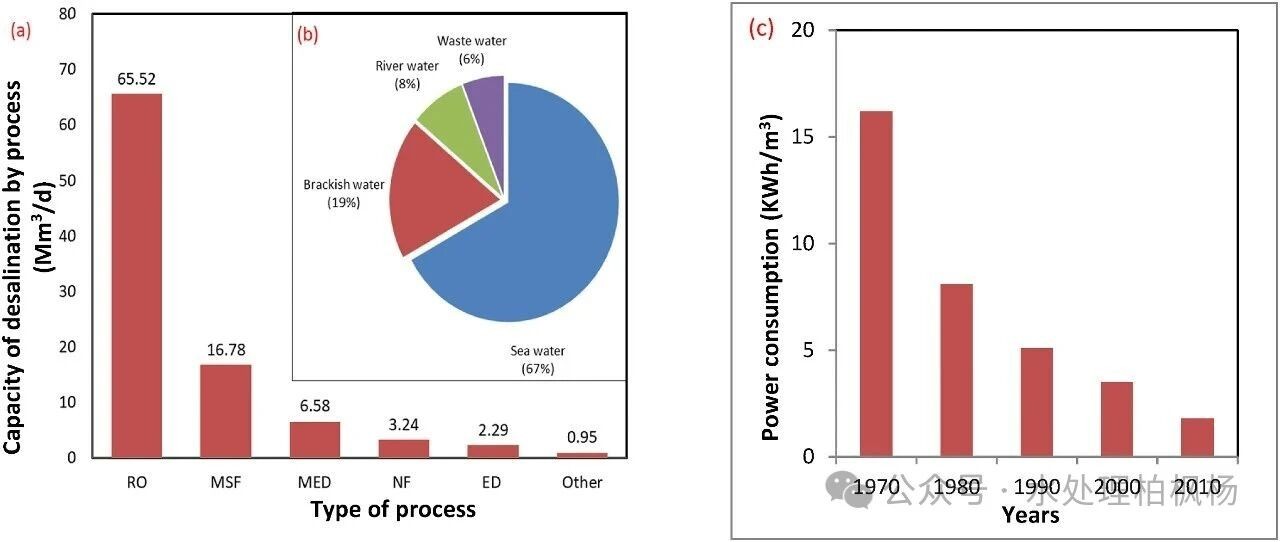
图2:全球海水淡化能力;(a)根据所用技术划分,(b)根据进水来源划分[239],(c)过去几十年反渗透海水淡化的能耗的改善情况[240]。
此外,在环境保护和公共卫生法规的指导下,RO兼具高产水率和几乎对所有致病菌、无机及有机污染物的极高截留率两大特性[23]。常见RO装置中的薄膜复合膜通常为螺旋卷式结构,使RO装置高度紧凑[24]。
RO膜通常由三层组成:一层厚约0.2 μm的活性聚酰胺层,以及分别厚约40 μm和120 μm的聚砜层和聚酯织物层[25]。聚酰胺层负责膜的选择性,聚砜中间层则使聚酰胺能够承受高压,而聚酯层因孔隙过多且不规则,无法直接作为活性聚酰胺层的支撑层[26]。
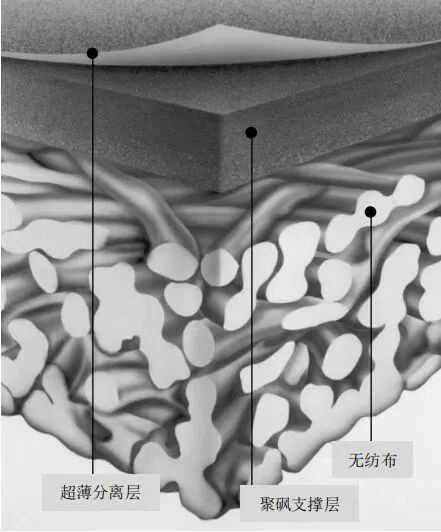
译注:非原文图片。
尽管膜技术已取得显著进步,但不可避免的膜污染仍是所有膜基操作面临的主要挑战[5,27,28]。膜污染对RO装置的性能有多重不利影响,包括产水水质恶化、渗透性下降,以及因能耗增加、压力要求增加、膜清洗频率增加、额外预处理需求和膜寿命缩短,从而导致的运行成本上升[29,30,31]。
例如,全球海水淡化行业为缓解生物污染现象所采取的预防措施,年成本约为150亿美元[32]。根据进水类型与水质、空间设计、膜性质、化学药剂投加量以及装置设计和运行参数的不同,膜表面可能沉积一种或多种类型的污染物[33]。
胶体物质积聚、有机污染、矿物沉积以及由微生物和有机物混合形成的生物膜,是RO海水淡化装置中最常见的污染类型[34, 35, 36, 37]。确定污染层的原因、形成机制和性质,对于采取适当的纠正措施以降低污染潜势,进而降低海水淡化运行的整体经济成本至关重要。
一般而言,污染类型可通过非破坏性技术(如观察装置性能变化)或破坏性技术(如污染膜的剖检分析)来识别。剖检分析技术包括对膜进行多种物理和化学分析,每项分析都能提供有价值的信息,极大有助于确定膜性能劣化的原因[38,39]。多项研究讨论了RO装置膜的剖检分析[34,38,39]。
例如,对某用于处理苦咸水的RO装置中取出的污染膜进行剖检分析,发现污染物包括多糖、有机铝磷络合物和铝硅酸盐等[40]。另一项研究报道,含有大量铁、氮和硅酸盐的有机物是导致膜劣化的主要原因[41]。
尽管剖检具有破坏性,但对污染膜进行剖检能显著降低运行成本[42]。因此,人们采用了多种方法来减少污染问题,例如开发新型RO膜、有效的膜清洗和表面改性,以及强化预处理[43,44,45,46]。
在处理各类用于去除进水中溶解性有机物、悬浮固体和污染物的水体时,合理选择预处理阶段至关重要。预处理阶段的选择取决于多个因素,包括进水水质、膜材料、回收率和膜清洗频率[47]。
预处理阶段可以是常规的,如消毒、阻垢、混凝和絮凝,也可以是非常规的,如纳滤(NF)、微滤(MF/Microfiltration)和超滤(UF/Ultrafiltration)[48]。
清洗策略通常用于去除污染膜上的污染层,从而恢复装置性能[28]。尽管在优化预处理阶段和膜设计以防止污染问题方面已付出巨大努力,但这些方法并不能完全消除污染,因此需要定期进行清洗。通常,当标准化产水数据下降约10%、压差增加15%或产水含盐量增加10%时,就需要通过清洗来恢复装置效率[49]。选择合适的清洗方式取决于污染层组成、运行周期、膜类型以及RO系统的结构和配置[33]。此外,采用无效的清洗策略会缩短膜寿命、增加更换频率,并提高运行和维护成本。
污染问题与膜的表面性质有关,例如表面亲水性和光滑度[50]。膜表面改性是帮助减轻污染问题的最有前景的方法之一。光滑且亲水的膜表面比粗糙且疏水的膜表面表现出更低的污染倾向[50]。目前已开发出多种创新改性方法来定制和改变膜的表面结构与性质,例如(但不限于)引入纳米材料或通过化学或物理方法对膜表面进行改性。实际上,通常会采用不止一种缓解策略来降低RO系统的污染风险[51,52,53]。
根据SciFinder检索,以“污染/fouling ”和“反渗透/reverse osmosis ”为关键词,过去23年间已发表超过4650篇文章讨论污染与反渗透(见图3)。这些新出版物中,77%为期刊论文,15%为专利,10%为会议和会议文件,仅有0.4%为专题综述,表明该领域的研究热度极高。因此,对RO污染问题及其控制策略进行最新综述至关重要。
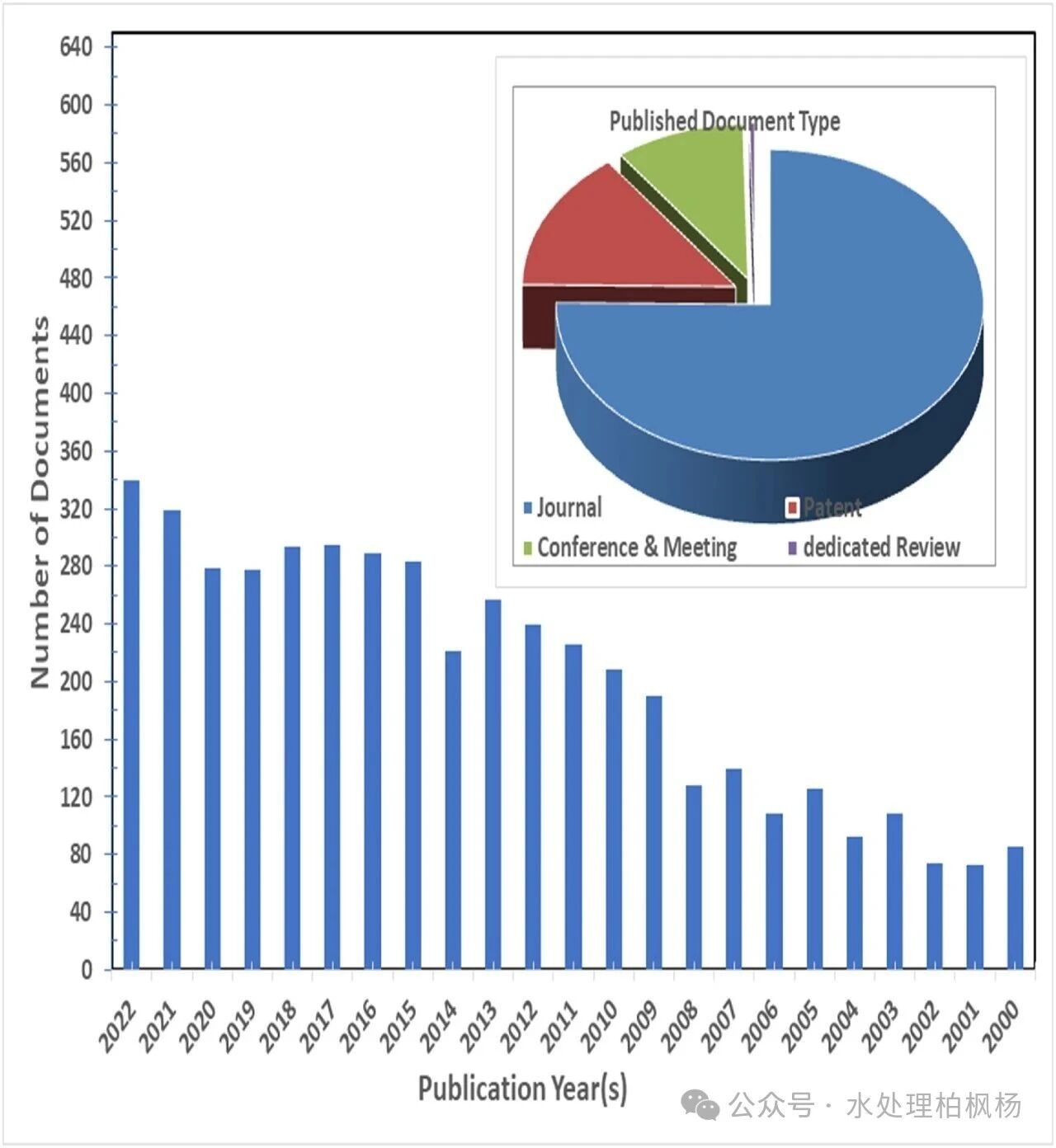
图3:基于SciFinder数据过去22年的出版物数量(检索词/search words:fouling and reverse osmosis)。
此外,根据Scopus数据库的检索结果,如表1所示,学界对RO膜污染、污染物类型与表征方法、膜预处理步骤、清洗方案及改性方法的研究兴趣浓厚。基础检索式为“(fouling or foul*) and RO”,并在此基础上叠加多个附加词,获得了如表1所示的文献数量。这些检索构成了本综述主题的基础。
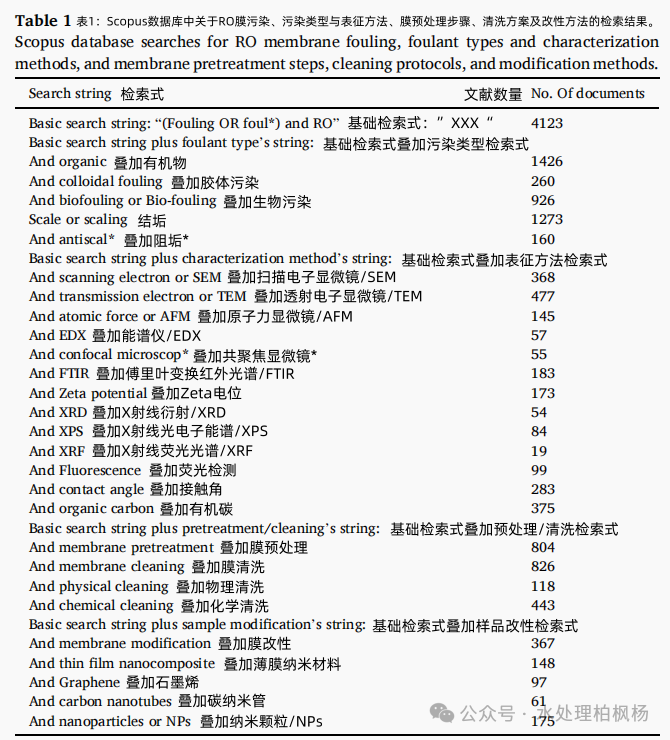
表1:Scopus数据库中涉及RO膜污染、污染类型与表征方法、膜预处理步骤、清洗方案及改性方法的检索结果。
本综述的首要目标,是借助前沿文献,对脱盐技术中污染的形成与治理进行全面阐述。深入了解导致这一问题的各项因素,将有助于制定切实可行的策略,以减轻或解决污染问题。
文中讨论了通过对污染膜进行剖检分析来识别和表征污染层的方法。我们还探讨了近期出现的污染修复或缓解策略,例如清洗、表面改性以及预处理强化。
最后,我们希望本综述能帮助研究人员理解各类污染,并开发出高效且经济的解决方案,从而为提供可持续的淡水资源贡献力量。
当然,本综述无意囊括该主题下所有已发表的论文。因此,对于未能收录进本综述的优秀文章,我们深表歉意。同时,本综述收录了其中部分具有代表性的文章,主要是基于其特色观点/数据以及与综述主题的契合性。
参考文献(1-53)
[1] T. Ramachandra, M. Solanki, Ecological assessment of lentic water bodies of Bangalore, The Ministry of Science and Technology 25 (2007) 96.
[2] J.F. Schyns, et al., Limits to the world’s green water resources for food, feed, fiber, timber, and bioenergy, Proc. Natl. Acad. Sci. USA 116 (11) (2019) 4893–4898.
[3] M. Adel, et al., Removal of heavy metals and dyes from wastewater using graphene oxide-based nanomaterials: a critical review, Environ. Nanotechnol., Monit. Manage. 18 (2022) 100719.
[4] M.W. Rosegrant, X. Cai, S.A. Cline, Global water outlook to 2025-averting an impending crisis: a 2020 vision for food, agriculture, and the environment initiative, International Food Policy Research Institute, Washington, U.S.A, 2002. ISBN: 0-89629-646-6.
[5] A. Matin, et al., Fouling control in reverse osmosis for water desalination & reuse: current practices & emerging environment-friendly technologies, Sci. Total Environ. 765 (2021) 142721.
[6] B. Chen, et al., Global land-water nexus: agricultural land and freshwater use embodied in worldwide supply chains, Sci. Total Environ. 613 (2018) 931–943.
[7] M. Adel, M.A. Ahmed, A.A. Mohamed, A facile and rapid removal of cationic dyes using hierarchically porous reduced graphene oxide decorated with manganese ferrite, FlatChem 26 (2021) 100233.
[8] M. Adel, M.A. Ahmed, A.A. Mohamed, Effective removal of indigo carmine dye from wastewaters by adsorption onto mesoporous magnesium ferrite nanoparticles, Environ. Nanotechnol., Monit. Manage. 16 (2021) 100550.
[9] M.A. Ahmed, A.A. Mohamed, A systematic review of layered double hydroxide-based materials for environmental remediation of heavy metals and dye pollutants, Inorg. Chem. Commun. (2022) 110325. M.A. Ahmed et al. Heliyon 9 (2023) e14908
[10] M. Adel, M.A. Ahmed, A.A. Mohamed, Synthesis and characterization of magnetically separable and recyclable crumbled MgFe2O4/reduced graphene oxide nanoparticles for removal of methylene blue dye from aqueous solutions, J. Phys. Chem. Solid. 149 (2021) 109760.
[11] M. Adel, et al., Characterization of fouling for a full-scale seawater reverse osmosis plant on the Mediterranean sea: membrane autopsy and chemical cleaning efficiency, Groundw. Sustain. Dev. 16 (2022) 100704.
[12] M.A. Ahmed, A.A. Mohamed, Recent progress in semiconductor/graphene photocatalysts: synthesis, photocatalytic applications, and challenges, RSC Adv. 13 (1) (2023) 421–439.
[13] M.A. Ahmed, M.A. Ahmed, A.A. Mohamed, Synthesis, characterization and application of chitosan/graphene oxide/copper ferrite nanocomposite for the adsorptive removal of anionic and cationic dyes from wastewater, RSC Adv. 13 (8) (2023) 5337–5352.
[14] M.F. Hamoda, N.F. Attia, I.A. Al-Ghusain, Performance evaluation of a wastewater reclamation plant using ultrafiltration and reverse osmosis, Desalination Water Treat. 54 (11) (2015) 2928–2938.
[15] J. Kim, et al., Facile surface modification of a polyamide reverse osmosis membrane using a TiO2 sol-gel derived spray coating method to enhance the antifouling property, Desalination Water Treat. 102 (2018) 9–15.
[16] I. Sola, C.A. Saez, J.L. S ´ anchez-Lizaso, Evaluating environmental and socio-economic requirements for improving desalination development, J. Clean. Prod. ´ 324 (2021) 129296.
[17] J. Eke, et al., The global status of desalination: an assessment of current desalination technologies, plants and capacity, Desalination 495 (2020) 114633.
[18] S. Yadav, et al., Organic fouling in forward osmosis: a comprehensive review, Water 12 (5) (2020) 1505.
[19] P. Goh, et al., Recent trends in membranes and membrane processes for desalination, Desalination 391 (2016) 43–60.
[20] F. Greco, S.G. Heijman, A. Jarquin-Laguna, Integration of wind energy and desalination systems: a review study, Processes 9 (12) (2021) 2181.
[21] J. Kim, et al., A comprehensive review of energy consumption of seawater reverse osmosis desalination plants, Appl. Energy 254 (2019) 113652.
[22] N. Voutchkov, Energy use for membrane seawater desalination–current status and trends, Desalination 431 (2018) 2–14.
[23] S. Bieber, Water treatment equipment for in-center hemodialysis, in: Handbook of Dialysis Therapy, Elsevier, 2017, pp. 123–143. e1.
[24] M. Qasim, et al., Reverse osmosis desalination: a state-of-the-art review, Desalination 459 (2019) 59–104.
[25] R.J. Petersen, Composite reverse osmosis and nanofiltration membranes, J. Membr. Sci. 83 (1) (1993) 81–150.
[26] A. Rodriguez-Calvo, et al., Reverse osmosis seawater desalination: current status of membrane systems, Desalination Water Treat. 56 (4) (2015) 849–861.
[27] N. Pena, et al., Evaluating impact of fouling on reverse osmosis membranes performance, Desalination Water Treat. 51 (4 ˜ –6) (2013) 958–968.
[28] S. Jiang, Y. Li, B.P. Ladewig, A review of reverse osmosis membrane fouling and control strategies, Sci. Total Environ. 595 (2017) 567–583.
[29] H. Alnajjar, et al., Organic fouling control in reverse osmosis (RO) by effective membrane cleaning using saturated CO2 solution, Separ. Purif. Technol. 264 (2021) 118410.
[30] M. Wu, et al., Membrane fouling caused by biological foams in a submerged membrane bioreactor: mechanism insights, Water Res. 181 (2020) 115932.
[31] J.W. Koo, et al., Fouling mitigation in reverse osmosis processes with 3D printed sinusoidal spacers, Water Res. 207 (2021) 117818.
[32] H.-C. Flemming, Microbial biofouling: unsolved problems, insufficient approaches, and possible solutions, in: Biofilm Highlights, Springer, 2011, pp. 81–109.
[33] G. Gonzalez-Gil, et al., Clinical autopsy of a reverse osmosis membrane module, Front. Chem. Eng. 3 (2021) 23.
[34] I. Karmal, et al., Structural and morphological characterization of scale deposits on the reverse osmosis membranes: case of brackish water demineralization station in Morocco, Groundw. Sustain. Dev. 11 (2020) 100483.
[35] C.H. Yoo, et al., Identifying the colloidal fouling behavior on the sharkskin-mimetic surface: in-situ monitoring and lattice Boltzmann simulation, Chem. Eng. J. 405 (2021) 126617.
[36] P.S. Goh, et al., The water–energy nexus: solutions towards energy-efficient desalination, Energy Technol. 5 (8) (2017) 1136–1155.
[37] Q. She, et al., Membrane fouling in osmotically driven membrane processes: a review, J. Membr. Sci. 499 (2016) 201–233.
[38] P. García-Trinanes, M.A. Chairopoulou, L.C. Campos, Investigating reverse osmosis membrane fouling and scaling by membrane autopsy of a bench scale ˜ device, Environ. Technol. (2021) 1–14.
[39] T. Darton, et al., Membrane autopsy helps to provide solutions to operational problems, Desalination 167 (2004) 239–245.
[40] F. Tang, et al., Fouling characteristics of reverse osmosis membranes at different positions of a full-scale plant for municipal wastewater reclamation, Water Res. 90 (2016) 329–336.
[41] S. Farhat, M. Bali, F. Kamel, Membrane autopsy to provide solutions to operational problems of Jerba brackish water desalination plant, Desalination 445 (2018) 225–235.
[42] G. Liu, et al., Role of membrane autopsy in enhancing reverse osmosis plant operation, Water Pract. Technol. 13 (1) (2018) 106–114.
[43] D. Ankoliya, B. Mehta, H. Raval, Advances in surface modification techniques of reverse osmosis membrane over the years, Separ. Sci. Technol. 54 (3) (2019) 293–310.
[44] T. Nguyen, F.A. Roddick, L. Fan, Biofouling of water treatment membranes: a review of the underlying causes, monitoring techniques and control measures, Membranes 2 (4) (2012) 804–840.
[45] V.M. Boddu, et al., Gray water recycle: effect of pretreatment technologies on low pressure reverse osmosis treatment, J. Environ. Chem. Eng. 4 (4) (2016) 4435–4443.
[46] R.A. Al-Juboori, T. Yusaf, Biofouling in RO system: mechanisms, monitoring and controlling, Desalination 302 (2012) 1–23.
[47] K. Karakulski, M. Gryta, M. Sasim, Production of process water using integrated membrane processes, Chem. Pap. 60 (6) (2006) 416–421.
[48] S. Jamaly, et al., A short review on reverse osmosis pretreatment technologies, Desalination 354 (2014) 30–38.
[49] S. Chesters, et al., RO Membrane cleaning, past, present, future–innovations for improving RO plant operating efficiency, in: The International Desalination Association World Congress on Desalination and Water Reuse 2013, 2013.
[50] Q. Li, et al., A facile surface modification strategy for improving the separation, antifouling and antimicrobial performances of the reverse osmosis membrane by hydrophilic and Schiff-base functionalizations, Colloids Surf. A Physicochem. Eng. Asp. 587 (2020) 124326.
[51] S. Feng, et al., Microporous polymer incorporated polyamide membrane for reverse osmosis desalination, J. Membr. Sci. 610 (2020) 118299.
[52] S.C. Mamah, et al., Flux enhancement in reverse osmosis membranes induced by synergistic effect of incorporated palygorskite/chitin hybrid nanomaterial, J. Environ. Chem. Eng. 9 (4) (2021) 105432.
[53] L. Upadhyaya, X. Qian, S.R. Wickramasinghe, Chemical modification of membrane surface—overview, Curr. Opin. Chem. Eng. 20 (2018) 13–18.


 Links
Links